


— By Katie Lee —
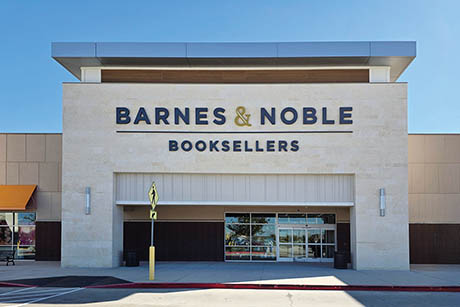
Barnes & Noble’s turnaround is being driven by three core strengths: sound bookselling fundamentals, local control over book curation and a refreshed store design.
The year was 2019; no one knew a worldwide pandemic was on the way. At Barnes & Noble, what they did know was a new CEO had just been announced. His name was James Daunt and, from the unforeseen challenges of 2020 to the record-breaking growth of 2025, the iconic bookseller has managed to turn adversity into opportunity every step of the way.

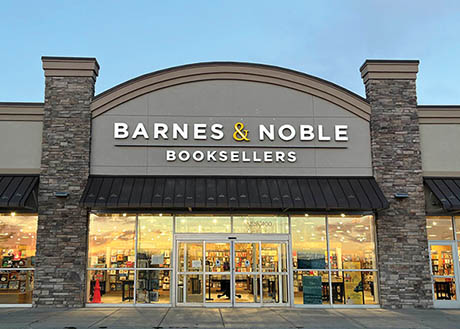
When the COVID-19 pandemic shuttered stores in 2020, Daunt was surely tested but not undaunted. Using these years to reassess store design and store count, by 2023 the company had streamlined its fleet to under 600 stores. A couple years later, the resilience of the concept and demand by consumers had rebounded. Barnes & Noble roared back. In 2025, it opened more new stores in a single year than it had in the whole decade from 2009 to 2019. Today, the New York City-based chain operates 717 U.S. locations, and it will open 40+ additional new stores this year — on the heels of the 19 new stores that have already opened in 2026.
“There are several factors behind Barnes & Noble’s success,” says Janine Flanigan, vice president, store design. “The turning point was James Daunt’s appointment as CEO in 2019. During the pandemic shutdown, James initiated a process that gave our store teams the opportunity to rethink and reorganize their stores, creating more engaging and distinctive spaces. To pull forward all of the interesting books that might have been buried in the shelves and highlight these books in their stores. At the same time, there was a renewed interest in reading, supported by BookTok, social media and an overall broader shared and renewed enthusiasm for books. As we began to come out of the shutdown, people found and used Barnes & Noble as a gathering place as well.”
Daunt also returned control of the bookstores to local booksellers, allowing them to curate their stores based on the interests of their specific customers and communities — which made each bookstore more individual, more interesting and more responsive to local readers.

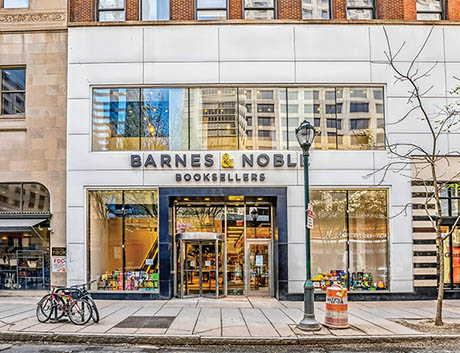
“What has made that success sustainable is the continued commitment of our booksellers,” Flanigan explains. “We use a cluster system across our stores, with each cluster developing expertise in areas such as buying, merchandising and operations. The stores within each cluster support one another by sharing knowledge, inventory insights and best practices. This cluster structure also helps to identify local trends more quickly and respond in a way that is key to each market.”
Today, each store feels more individual and relevant to its community, while benefiting from the support and scale of the broader company.
“At its core, the comeback is rooted in good bookselling, strong local curation and creating interesting bookstores that people want to visit and spend time in,” Flanigan says.
Barnes & Noble holds a positive outlook for 2027 as well. The company expects to continue opening new stores while also investing in and remodeling a number of its older legacy locations.
“The bookselling business is healthy,” Flanigan says. “Our core book business continues to perform well, along with our adjacent categories like toys, games, puzzles, gifts and vinyl. Overall, we remain confident in the strength of the business and the continued demand for welcoming, interesting, well-curated bookstores.”
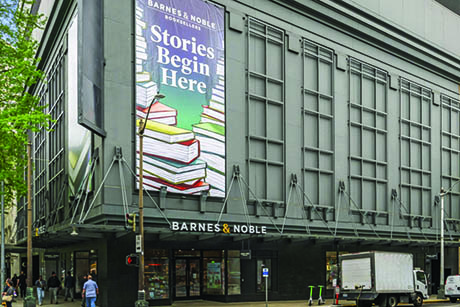
Barnes & Noble operates in all 50 states and Washington, D.C. It recently returned to downtown Seattle and has opened nine new stores in California since January 2025, with five more still to open this year. The West Coast isn’t the only hot market.
“We have an active pipeline across the country,” Flanigan says. “Florida and Texas have been particularly strong markets for us, with multiple store openings in both states. Illinois has as well in and around the Chicago area. We are continuing to expand in communities nationwide, bringing new bookstores to many communities. It is all very exciting.”
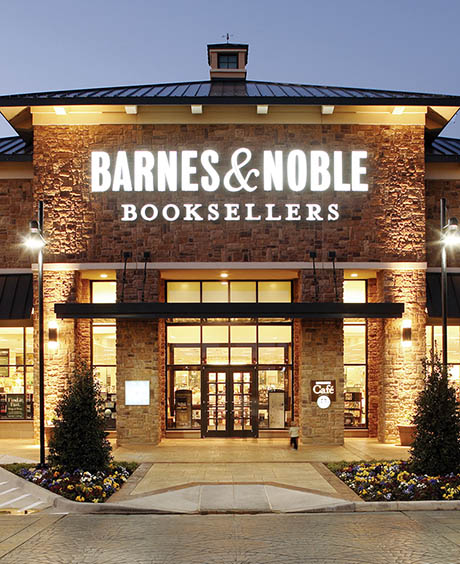
Since 2020, Barnes & Noble has been opening stores in a new model featuring bright wood finishes and a lighter, more open and inviting environment. These new stores, which average around 20,000 square feet, are laid out differently from the legacy fleet, largely because the new model and design use space more efficiently.
“Rather than a more traditional grid, these stores are designed to take customers on a journey throughout the bookstore,” Flanigan says. “The space is organized into a series of rooms, with each one leading naturally into another area of related or complementary interest. Each room also gives our booksellers more flexible and dynamic space to create displays, highlight important titles and feature books selected specifically for their local customers and communities.”
Not every store includes a Barnes & Noble Café, although many do. Whether a café is included depends on the size, location and needs of the individual store. Flexibility is key.

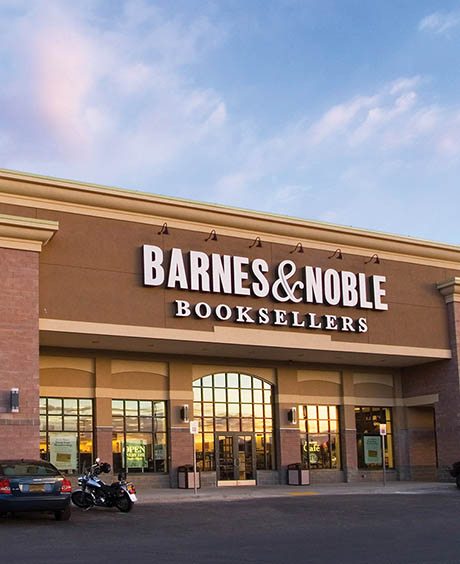
“Our fixture package is flexible and allows categories and displays to move and evolve easily based on the needs of each store,” Flanigan says. “While 20,000 square feet is an average size, the strength of this prototype is its adaptability. We can successfully layout a bookstore to both larger and smaller spaces.”
Barnes & Noble is also flexible in the types of real estate it considers. The most important factors are customer access, visibility and foot traffic. It has opened in-line spaces, freestanding locations, former retail stores (such as a former North Face store in Seattle) and ground-up developments. Repositioning existing retail space can be a strong opportunity because it allows Barnes & Noble to bring a bookstore to market efficiently while giving underused space a new purpose.
“Our design and construction teams are experienced in adapting the bookstore model to a wide range of buildings and footprints,” Flanigan says. “The flexibility of our prototype and fixture package allows us to make both larger and smaller spaces work successfully.”
The origins of the new store design date back to the pandemic. The forced store shutdowns provided a rare opportunity to reevaluate everything from top to bottom.
“The pandemic was an extraordinarily difficult period as everyone knows, but it also became a moment of significant change for Barnes & Noble,” Flanigan says. “We were fortunate that James Daunt had recently been appointed as the company’s CEO and recognized the shutdown as an opportunity to rethink how our bookstores were organized and presented. Our booksellers worked tirelessly under very challenging circumstances to relay and reimagine their stores. They reorganized sections into more distinct rooms, improved displays and presentation, and created a more engaging customer experience. That work became an important step in returning greater ownership of each bookstore to its local booksellers.”
At the same time, the way people shopped was also changing.
“Online ordering and curbside pickup became essential, and we adapted quickly to serve customers in new ways,” Flanigan says. “We also saw a renewed interest in reading, puzzles and games, and were well positioned to support that demand.”
Today, the lasting lessons for Barnes & Noble from the pandemic years are the importance of agility, local decision-making and strong communication across the company. “Over the past five years, those principles have continued to shape how we design, merchandise and operate our bookstores,” Flanigan says.
Under Flanigan’s leadership, Barnes & Noble recently launched a new department whose focus will be refining Barnes & Noble’s approach to refits and remodels. “We have seen tremendous success with the new store model, and one of our most important goals is to take the elements that are working so well — stronger design, better flow, greater flexibility and more engaging spaces — and thoughtfully bring them into our legacy stores.”
Flanigan says she is fortunate to have two outstanding leaders guiding both sides of the work: new stores and legacy projects. “Together, we are focused on building stronger processes, developing our people and continuing to improve the bookstore experience across the fleet.”
It’s the daily problem-solving challenges of the work that Flanigan loves most. “Every day brings a new puzzle to solve, whether I am thinking about how to improve a bookstore, adapt a space or bring new life to one of our legacy locations. I love seeing a site that begins as dirt, an empty box or a bare shell and having the opportunity to help transform it into a bookstore. I have been with Barnes & Noble for 41 years, and I feel very fortunate to do work I love every day. I also have the opportunity to work with an incredibly talented group of people who care deeply about creating great bookstores.”
She adds: “Most of all, I love that I get to be around books every day.”
SIDEBAR:
MAINTENANCE Q&A
R&R: What are your biggest maintenance challenges?
Janine Flanigan: “From a maintenance perspective, our greatest opportunity is our legacy fleet. Many of these stores are older and have gone through years of limited investment, so there is meaningful work to be done. This creates a real opportunity for us. We are now investing in refits and remodels that improve the customer experience, address aging infrastructure and bring new life to these bookstores. We have completed several projects already and expect this work to remain an important part of our strategy going forward.”
R&R: How is your maintenance department organized?
Flanigan: “We have a dedicated and highly experienced facilities team, many of whom have been with Barnes & Noble for many years and know our stores exceptionally well. Each team member supports a group of stores and works closely with the local store teams to address a wide range of maintenance needs.
“They also partner with both national service providers and local vendors, depending on the type of work and the needs of the individual store. Overall, our facilities team plays a critical role in keeping our buildings operating smoothly and our stores welcoming for customers and booksellers.”
R&R: Do you rely on national vendors? Or a mixture of national and regional/local service providers?
Flanigan: “We rely on national, regional and local service providers. The right partner depends on the type of work, location and specific needs of the store.”
R&R: How do you choose your vendors?
Flanigan: “The criteria vary by department/type of service, but generally include experience, quality of work, responsiveness, geographic coverage, reliability, safety and cost. Ultimately, we look for partners who understand our needs and can consistently support our stores.”
— This article originally published as the cover story of the June/July 2026 issue of Retail & Restaurant Facility Business. To have your retail or restaurant brand considered as a profile on an upcoming cover, please email the editor, Katie Lee, at katie@francemediainc.com.