



— By Ross Haigler —
It’s not the storm that shuts you down. It’s what fails first.
Running a business has never been simple. Whether a restaurant or a retail storefront, operators are managing tight margins, fluctuating supply chains, staffing challenges and increasing customer expectations — all while keeping facilities, equipment and technology running without interruption. Under normal operating conditions, there’s little room for error. Now, layer in hurricane season.
Severe weather isn’t just a seasonal concern. It’s a stress test of everything that keeps a business running. A single disruption can ripple quickly across all operations: deliveries are delayed, power is lost, inventory is at risk and customers are left uncertain about whether the doors are open. When that happens, the issue is rarely just the storm itself.

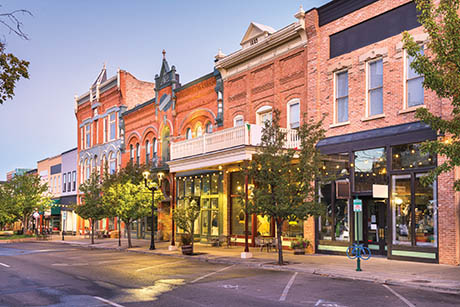
When key parts of the structure fail — like a shattered storefront window, a compromised back-of-house door or water entering through the roof — wind and water move in quickly, triggering a cascade of issues that multiply loss across the business. These “damage amplifiers” are small vulnerabilities that, when exposed during a storm, escalate into major problems. For business operators, the real risk isn’t just physical damage. It’s downtime.
Downtime Is Where Loss Happens
Picture a familiar scenario. It’s Friday evening and the dining room is full. Or perhaps it’s Saturday afternoon and your store is full of shoppers. Then the power goes out.
Point-of-sale systems stop processing payments. Online orders disappear. Refrigeration temperatures begin to climb, or critical inventory systems go offline. Your staff is looking for direction, and there’s no clear answer to how long the outage will last.
On its own, a power outage may be temporary — an inconvenient interruption you can recover from in a few hours. But when it’s part of a larger event, like a hurricane simultaneously bringing wind, water and access challenges, the disruption compounds quickly and the consequences become significant. We’ve seen how this plays out. After Hurricane Sandy, 43% of businesses reported utility interruption as a primary driver of loss — especially in operations where power loss disrupted critical systems.
The impacts add up quickly. Inventory can be lost to spoilage or system failures. Revenue drops as operations slow or stop. Compliance requirements become harder to meet. Each disruption risks frustrating customers in ways that can affect long term loyalty. For many organizations, a disruption is never just an inconvenience — it’s a direct hit to revenue, operations and brand reputation. When disruptions like this occur, the immediate challenge becomes keeping the business running despite them. That shift — from reacting to the outage to maintaining operations — is where business continuity planning begins.
Protecting Operations Through Continuity Planning & Facility Readiness
Keeping the business running in those moments comes down to maintaining a critical set of functions. For restaurants and retail locations, that often includes refrigeration or climate-controlled storage, point-of-sale and payment processing, payroll, inventory and ordering systems, and communication. When these systems go down, the cost of downtime increases with every hour. Maintaining those functions depends on a few core areas operators can plan for in advance.
• Power continuity is often the first priority. Understanding what must stay operational — whether refrigeration, lighting, payment systems, or back-of-house technology — and maintaining backup power for that equipment helps limit losses.
• Supply chain interruptions can quickly follow, especially if distributors or suppliers are affected by the same event. For retail, that may mean gaps in inventory or delayed restocking. For restaurants, it can limit menu availability. Identifying backup vendors ahead of time helps reduce that risk.
• Communication is equally critical. Employees need direction, and customers need to know whether you’re open, closed or operating in a limited capacity. Without a plan, uncertainty compounds the disruption.
The first 24 hours often define the outcome, and how much the business ultimately loses. Simple decisions such as protecting high-value inventory, limiting unnecessary system use and communicating operating status can significantly reduce losses. Their success, however, often depends on the condition of the building itself.
Which is why reducing vulnerabilities at the building level is so important. For restaurants and retail locations, disruption often traces back to a few predictable failure points — the roof, doors, windows and conditions around the property. When one of these fails, it can quickly trigger issues elsewhere.
Even minor roof damage can allow wind-driven rain inside, damaging interiors, equipment or inventory and forcing closures. Routine inspection and maintenance of roof coverings, flashing, drainage and rooftop equipment helps prevent those failures.
Openings are another critical point of exposure. If doors or windows fail, pressure changes within the building and debris can drive damage deeper, affecting dining areas, sales floors or back-of-house operations. Ensuring these elements are secure, in good condition and appropriately rated for local conditions helps reduce that risk.
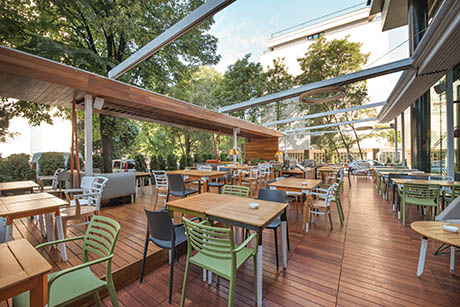
The surrounding property matters, too. Unsecured signage and furniture on patios can become wind-borne hazards. When there is a threat of severe weather, securing loose items and maintaining the property helps prevent avoidable damage.
Preparation Determines Performance
Ultimately, what determines whether a business can continue operating isn’t the event itself — it’s how prepared the operation is to respond and how well the building performs. Small vulnerabilities, whether in the facility or in day-to-day planning, have a way of compounding under pressure. Addressing those risks ahead of time gives operators greater control over outcomes, helping limit disruption, protect revenue and recover faster. That preparation is what keeps the lights on when everything else goes dark.
— Ross Haigler, senior director of commercial lines at the Insurance Institute for Business & Home Safety (IBHS), draws on his expertise in commercial property risk and resilience to explain how small vulnerabilities can quickly escalate into costly business interruptions.