


— By Katie Lee —
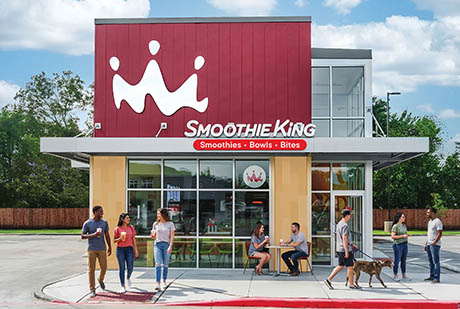
Smoothie King unveils its next chapter with a new brand campaign and in-store transformation, celebrating over 50 years of balancing nutrients and flavor.
In 1973, Smoothie King introduced a bold new F&B category to the world, literally coining the term “smoothie.” Since then, the king of smoothies has grown to more than 1,200 U.S. locations — and more than 200 new store commitments — with over 1,500 available trade areas in its development pipeline. Now underway on a new brand evolution, Smoothie King is setting the stage for its next 50 years by transforming the in-store experience, updating operational technology and expanding its menu offerings — all rolling out over the coming year.

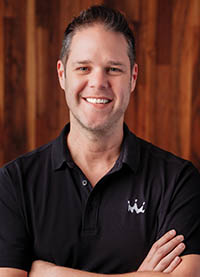
“This next chapter is about leaning into our heritage of more than 50 years of expertise in making ‘nutrition delicious’ and our vision to make the world a better place by nourishing healthy habits,” says Gavin Felder, president of Smoothie King. “Smoothie King’s brand evolution is grounded in consumer research that showed us how guests’ definition around health and wellness has evolved. Today, health and wellness are much more holistic than just fitness.”
In other words, what you put into your body is just as important as what you get out of it. With that in mind, Smoothie King designs each recipe from the ground up and works with nutritional experts to balance nutrients and flavor — to keep the nutritious delicious.
The new brand evolution also reinforces how Smoothie King cares for (and listens to) its guests. As consumer expectations evolve, Smoothie King remains committed to thoughtfully crafted recipes that do the nutritional heavy lifting for you. The brand evolution brings the same level of care behind every smoothie to the in-store experience, design and every touchpoint to ensure every guest feels cared for from the moment they walk in.


Moving away from the more stark, functional aesthetic of the past, the updated design introduces warmth and approachability. The new store design was grounded in consumer feedback and was paired with both in-house and external teams to curate the final design. Smoothie King worked with Other Tomorrows, an experience design boutique firm based in Boston, and Barkley, its advertising agency of record based in Kansas City, Missouri. Claudia Schaefer, Smoothie King’s chief marketing officer, initiated the consumer research shortly after stepping into the role in January 2025, within her first few months on the job.
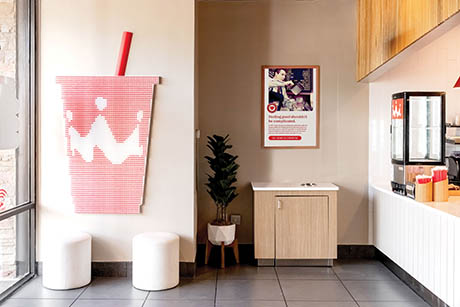
“I wanted to ground our strategy in a true understanding of the guest, rather than assumptions,” she says. “After consumer research, we refined our store interiors with branded artwork and merchandising, including a smoothie-inspired installation made from our iconic red straws, integrated greenery, a redesigned menu board, updated lighting and a warmer color palette.”

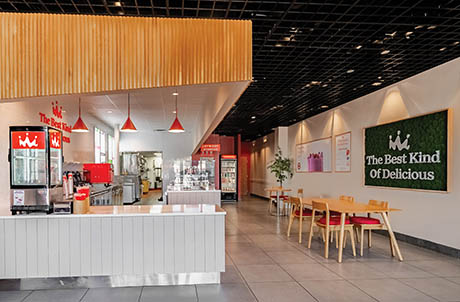
Schaefer’s team took a comprehensive research approach that combined both qualitative and quantitative methods to understand, on a deeper level, how guests perceive the brand and to validate those insights at scale. What works best for guests also must work operationally. Therefore, the updates were designed to be both impactful for guests and practical to implement across the system.
“The feedback we’ve received — both from operators and guests — has been very consistent and encouraging, and it really validates the direction we’re taking,” Schaefer says. “From a guest perspective, what we heard in our research is that while people love our smoothies, the in-store experience didn’t always fully reflect the level of care and quality they expect from a brand centered on health and wellness. The updated design is addressing that by creating a warmer, more intuitive and more engaging environment. Guests are responding positively to the improved menu clarity, the more inviting atmosphere and the storytelling elements that help them better understand what we stand for.”

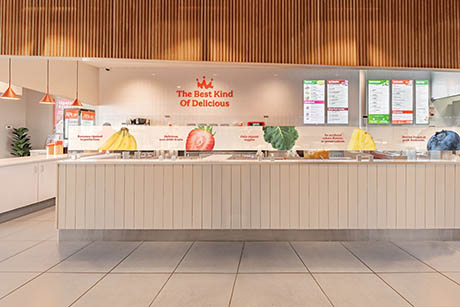
From an operator standpoint, feedback has been equally important. “Operators appreciate that the changes are not just aesthetic, but also operationally thoughtful — things like clearer menu boards that make ordering easier and more efficient, and a layout that better supports connection with guests,” Schaefer says. “So overall, the response has reinforced that we’re on the right path, creating an experience that better aligns with our vision while also working in a real-world operating environment.”
Another area of growth has been Smoothie King’s first-ever rollout of food offerings in summer 2025. Since then, the food menu has quickly become a key growth driver, with an expanding lineup that will include flatbreads in the coming months, alongside continued innovation in high-protein offerings.
“We started the initial phase of the rollout last summer, which was designed to pair with our smoothies,” says Felder. “This year we’ll be introducing a range of flatbreads that are protein-packed and a perfect complement to your smoothie choice. It’s about meeting our customers where they are and making it easier to build healthy habits into everyday life.”
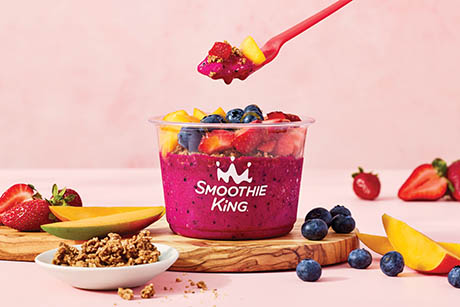
Thanks to its new food menu, Smoothie King is adding ovens to its equipment package for the first time — at no cost to its existing franchisees. The rollout of the new ovens, systemwide, is considered a corporate investment in menu expansion.
“We’re covering the oven costs for our franchisees,” Felder says. “This allows franchisees to easily introduce new food offerings, grow incremental revenue streams and meet evolving consumer demand all while reinforcing our commitment to being a growth partner to our operators.”
Given the corporate support and room to grow, operators are doing just that. By the end of 2025, Smoothie King had 1,200 franchised locations and 42 corporate locations. The mostly franchise-driven system remains committed to growing through franchising. Non-traditional locations are also a big growth opportunity.


“Non-traditional locations are an important part of Smoothie King’s growth strategy,” says Chris Bremer, chief development officer of Smoothie King. “The brand already has a strong presence in these environments, including three locations across different terminals at Dallas-Fort Worth International Airport and a newly signed location at Joint Base Andrews. We also have a longstanding presence in major venue partnerships, including LSU and the Smoothie King Center in New Orleans, which reflects the brand’s deep roots in the community and continued cultural relevance. As we look ahead, we see continued opportunity to expand across airports, military bases, stadiums and other high-traffic venues.”
All told, Smoothie King has 200 commitments in the pipeline and more than 1,500 available trade areas in the U.S. For 2026 specifically, Bremer says the brand is forecasting more than 90 new store openings. The brand offers a variety of flexible asset types which result in different sizes, but the approximate average is about 1,200 square feet.
“We’re primarily focused on expanding our business in the U.S., where we firmly believe that more than half of the nation’s Smoothie Kings have yet to be built,” Felder says. “We’re entering our next chapter with a series of initiatives in 2026 designed to build on strong business momentum and set the foundation for Smoothie King’s next 50 years of growth. We may have been around for over five decades, but in many ways, we’re just getting started!”
SIDEBAR:
ON OPERATIONS
Chris Bremer, Chief Development Officer: “Smoothie King’s operations model is intentionally streamlined, it’s easy to learn and easy to execute with much less complexity compared to traditional QSR concepts. The model offers simplified prep, limited equipment — no grills, fryers or hood systems — and a consistent menu system that requires fewer team members which enables efficient training and day-to-day management. We continue to modernize our system with new technology, including enhanced digital ordering, data-driven guest engagement tools and technology platforms that help franchisees optimize operations and make informed decisions.”
ON REPAIR & MAINTENANCE
Bremer: “We rely on a network of both national and local vendors to assist with any R&M issues. These are selected based on the trade and service needed and their coverage abilities. They are vetted based on a variety of performance and response metrics and to ensure they can deliver against brand standards.”
— This article originally published as the cover story of the May 2026 issue of Retail & Restaurant Facility Business magazine. To have your restaurant or retail company considered for a future cover story, please email the editor, Katie Lee, at katie@francemediainc.com.