

— By Tom Lekometros —
Successfully transitioning online retail brands into brick-and-mortar stores takes design strategy.
Transforming an online retail business into a brick-and-mortar store is a considerable step that comes with a great deal of strategy, planning and preparation to achieve success. Despite the popularity and seeming dominance of online shopping, more than 80% of retail sales still occur in physical stores, according to Capital One Shopping Research.
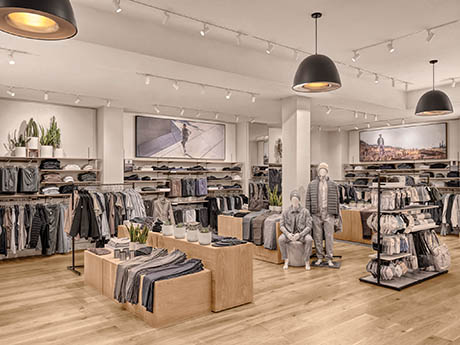
While most consumers still prefer the in-person shopping experience, many devoted online shoppers visit physical stores to see, test or experience products before buying. When executed correctly, brick-and-mortar stores can serve as real-world extensions of the online brand. The best click-to-brick brands provide an experiential platform that integrates with architecture and a sales transaction environment while offering an opportunity to appeal to a new and diverse customer base.
With 56% of adult consumers preferring to shop both online and in-person and 91% of those consumers opting for brands that offer a seamless omnichannel experience, these well-executed click-to-brick concepts can further strengthen the brand. Knowing where to start can be challenging.
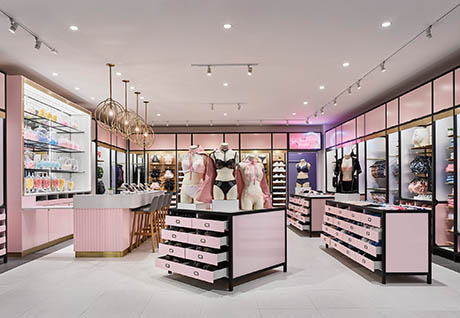
For brands entering the click-to-brick space, having a design partner with the depth of experience to appeal to diverse audiences in retail spaces, plus experience transforming online brands into successful brick-and-mortar retail outlets, is paramount.
You are creating a physical brand experience from essentially a blank piece of paper. Most people who have never done this before have no idea what that means. Our design team sets up a road map for emerging click-to-brick brands that is sensible and achievable.
Fulfilling Warby Parker’s Vision for Retail Outlets
One of the earliest examples of our success taking a brand from click-to-brick was with online eyeglass retailer Warby Parker. By circumventing traditional channels in the industry, Warby Parker has become an innovator in the eyewear industry, designing fashionable glasses in-house and engaging their customers directly.
We created location-specific, custom stores designed around the company’s core principle that buying glasses should be easy and fun. Each unique store was designed to reflect the culture and energy of its local community while adhering to the company’s brand standards in terms of store layout, display and functions integrated into a national rollout strategy.
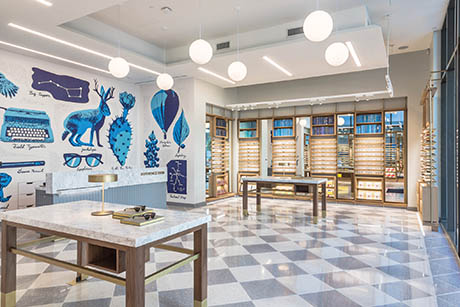
To elevate Warby Parker’s stores on a relatively modest budget, our designers developed unique themes for each store such as gaming, writer’s block, Miami pool side and green screen studio nooks. These unique stores provide a source for marketing and public relations opportunities while also allowing Warby Parker to test out new ideas.
Our Warby Parker store designs also often involved collaborations with the company’s branding consultant and typically required significant modifications to existing buildings. Past stores have included a workshare space with a non-profit educational group, collaborations with local artists for murals and custom art pieces, soda bars and even a custom walnut and brass clock.
Using Architecture to Grow Vuori’s Brand
Our success with Warby Parker opened the door for future collaborations with other retailers seeking to expand, such as upscale athletic clothing brand Vuori.
Based in Encinitas, California, Vuori makes premium athletic clothing inspired by the active coastal California lifestyle. With business thriving online and in physical stores, Vuori decided to expand the brick-and-mortar side of the business with our help.
We were brought on board in 2021 to assist with the brand’s national rollout. Our first project was designing a new store in Boston. That store was quickly followed by Vuori Outlet locations in Phoenix, Houston and San Francisco, with additional Vuori stores in Miami; Nashville, Tenn.; Aspen, Colo.; and St. Louis. Vuori currently operates around 40 stores and plans to open 20 to 25 locations per year, with a goal to reach 100 stores by 2026.
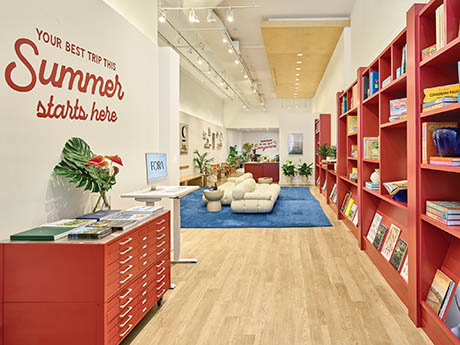
Many of the concepts we used for Warby Parker were used in designing the Vuori retail stores, with a focus on having the architecture support the brand’s vision and mission. We developed elevated store designs that align with Vuori’s well-established brand as a lifestyle clothing retailer and an innovator in the lane of activewear. Each 3,500- to 5,000-square-foot retail studio reflects a spacious, refined environment featuring light, open and airy interiors with a clean, minimal material palette — much like Vuori’s apparel and brand aesthetic.
As an inclusive brand, understanding Vuori’s customer demographics was key to designing the retailer’s physical stores. The architecture of the in-store environment was designed to showcase how the Vuori brand cares for its team, community and environment by utilizing an open floor layout, lighting that highlights its products and a fit lounge that reflects the laid-back nature of the brand.
Making a Great First Impression
Creating an impression on customers the moment they step into the store is one of the cornerstones of a successful brick-and-mortar retail design. In architecture, we consider the idea of the front door experience and what happens within the first 3 feet after you walk in the door as it relates to the brand. We can start to paint the story that we’re telling with colors and materials and lighting effects and display of products and all the things that go into what the physical store experience is for the shopper.
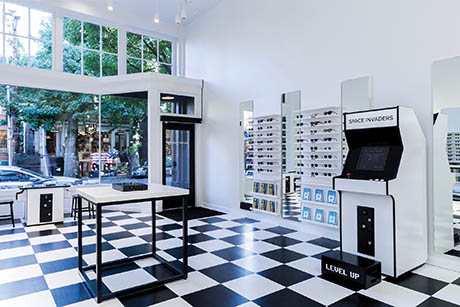
In a world where minimal design is at the forefront, we know it comes down to the details to ensure our storefronts are designed in a way that is authentic to the brand. Depending on the neighborhood we are going into, we take into consideration the existing conditions of the store and try to pay homage to the history of the site by working with what is already there, instead of always choosing to start from scratch.
For the first time in recent years, we have seen brick-and-mortar sales grow faster than online sales. Taking an online retail business into the brick-and-mortar world is a considerable step, but the rewards can be great when planned correctly with the right design partner. Appealing to a broader range of consumers while giving an established, online customer base the opportunity to immerse themselves in the physical brand experience can be priceless.
— Tom Lekometros is the managing principal of Lawrence Group’s New York office. With a particular affinity for retail and hospitality spaces, Lekometros approaches each project as the chance to tell a story through design. Founded in 1983, Lawrence Group is an integrated planning and design firm headquartered in St. Louis with professional staff in Texas, Florida and New York. Lawrence Group specializes in architecture, interior design, master planning, landscape architecture and furniture procurement. Website: www.thelawrencegroup.com.