
— By David Shove-Brown —
As brands prepare for national expansion, they should partner with architects and interior designers to facilitate a more seamless, successful approach.
Growing a brand into a nationally-franchised chain begins from the bottom up. Everyone has to start somewhere, and for many of the top fast-casual restaurant concepts in America, that means starting small. Every move a restaurateur makes when developing a concept has to be intentional and aligned with their goals for scaling the business. While branding is a foundational element of successful business practice, thoughtful design curation and implementation is just as important. A restaurant’s physical environment works to fully immerse consumers, bringing a brand story to life right before their eyes.
As brands lay the groundwork for national expansion by refining menus, building strong relationships with target audiences and driving efficiency, partnering with architects / interior designers will facilitate a more seamless, successful approach to expansion.
A Concept Built for Anytime, Anywhere
For many restaurateurs, opening the first few locations of a restaurant concept feels more hands-on; they get to be on-site, overseeing the implementation and execution of their concept in real time. With a national expansion, it can feel like a loss of oversight and control.
Design is a powerful tool in bridging the gap between concept development and execution, especially when the team implementing the concept was not a direct part of the initial process. To support consistency across a chain regardless of location, prototypes must be carefully curated from the start, establishing a concept that can be built anywhere by anyone. Prototypes need to be both easy to understand and install, which means mapping out clear plans and instructions using materials that are readily available. For example, it might not be feasible to import marble from Italy for every location because delivery timeline and availability varies so greatly. Selecting nationally-accessible materials, colors and furniture ensures consistency in new locations while allowing for fast and efficient openings.
Though it’s crucial to have a sense of uniformity across a chain, the design should also incorporate touches that are distinctly local, creating a sense of place for diners that integrates the restaurant into the community. Murals depicting regional landmarks or identifiers, locally-sourced art and even a simple choice to install outdoor heaters for cold-weather locales support an environment that makes consumers feel welcome and valued.
Fish Taco: A Case Study in Setting Up a Brand for the National Stage
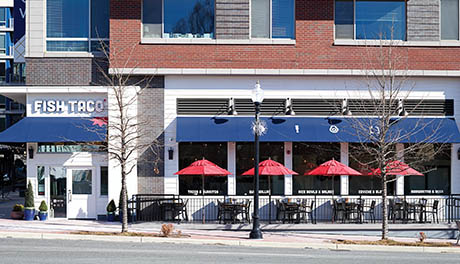
A great example of facilitating brand expansion prototyping comes from DMV-based fast casual concept Fish Taco. Though the brand has multiple locations across Virginia and Maryland, its newest spot in Falls Church, Virginia, represents an exciting expansion of the brand’s presence in the area and beyond. The new location establishes new brand standards while refining and maximizing operations.
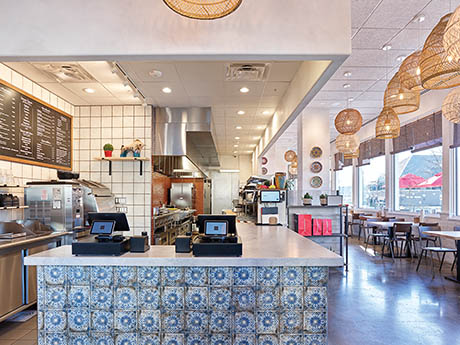
Located in the newly-established Founders Row development, the restaurant stands out for its vibrant, playful aesthetic and dining experience, embracing existing elements of the brand while drawing upon its locale. The //3877 design team collaborated closely with the owners to develop an aesthetic that synthesizes the best elements of each existing location, maintaining a recognizable brand experience for customers while optimizing efficiencies for staff.
Fish Taco had an established brand, including a clear logo, icons and color scheme. The new prototype took those existing elements, including signature design elements from the previous restaurants, and reimaged the space through a more elevated lens. This pushed the brand to raise the bar by incorporating choices ranging from more subtle moments with tile and lighting to bolder moves like a new facade and outdoor patio space. Throughout it all, the prototype used design to tie back to the brand’s theme and what the owner had envisioned for the space and its next chapter.
In a world where delivery is more accessible than ever, a designated takeout component was critical to this new iteration of Fish Taco. As the team developed this aspect of the space, the need for it to evolve based on the unique needs of a locale were front of mind, prompting questions such as: Do delivery drivers in the area typically use cars or bikes for transportation? Is it a walkable area, or does parking need to be allocated for customers running in for takeout? All of these aspects and more were at the forefront of customizing the to-go area. Located right by the main counter, the space is both visible from the front door and discreet enough to minimize disruption to dine-in patrons.
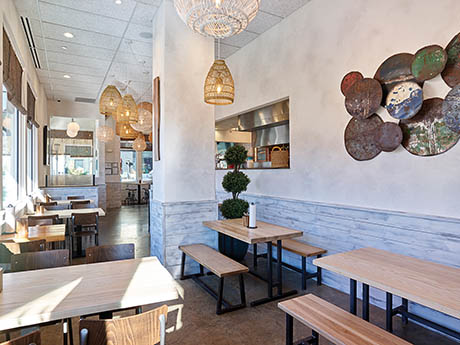
The prototype also had to consider the relationship Fish Taco wanted to build with its target audience. While the restaurant prides itself on quick and easy service, the owners wanted to create an elevated environment that highlights its quality, homemade food and invites patrons to sit and stay a while if they choose. The dynamic space, including its outdoor “front porch,” has a wide range of appeal, hosting a gathering of friends meeting up for drinks and families going out for dinner simultaneously.
The impact of design goes beyond front-of-house service and aesthetics; in the kitchen, it’s crucial to maximize space in (often constricted) square footage. The prototype was developed so that no matter the parameters of the space, the kitchen operations could be adapted without compromising efficiency and service. The owner of Fish Taco, Francis Namin, was a valuable asset to the design team, as he has an acute understanding of the kitchen equipment. His deep knowledge of these tools allowed the design team to determine what was working for staff versus what wasn’t needed, inspiring conversations on space allocation that resulted in a kitchen layout that made the jobs of kitchen staff easier and therefore positively impacted service times and customer experiences.
As Fish Taco gears up to broaden its presence beyond the DMV area, the lessons learned from the Falls Church location and those that came before it will promote a more seamless path forward for growth. When a brand is in tune with its identity and understands how to deliver on promises made to customers, it’s ready to take the leap forward.
Future Forward Approach to Prototypes and Planning
Successfully scaling a fast-casual concept for national appeal requires more than a strong menu and recognizable logo; it demands a physical environment and design language that consistently communicates the brand wherever it goes. Thoughtful prototyping helps translate a restaurant’s identity into spaces that can be replicated efficiently without losing their character or sense of place. By aligning operational needs with a compelling customer experience, design partners can help restaurateurs create a practical and memorable framework for growth. As brands like Fish Taco demonstrate, when design is treated as a strategic partner from the beginning, it becomes a powerful tool for confident, sustainable expansion. n
— David Shove-Brown is co-founder and partner at //3877, which designs collaborative environments by working closely with clients on restaurants, hotels and commercial spaces. //3877 has offices in Washington, D.C., and New York City. Visit www.3877.design/.