

[EDITOR’S NOTE: This article originally published in December, in the December 2025/January 2026 issue of Retail & Restaurant Facility Business.]
— Interview with Nathan Willard —
HOODZ’s Nathan Willard talks preventative maintenance: steps your facility should take to clean & maintain kitchen exhaust systems this holiday season.
R&R: Why is kitchen exhaust cleaning especially important during the busy holiday season?
Nathan Willard: During the holidays, families are not only eating together in the comfort of their own homes; they are also sharing meals at local restaurants. While kitchen exhaust cleaning is important year-round, it is especially important during the busy holiday season when cooking typically increases. This increased activity leads to accelerated grease buildup, which can become a serious fire hazard if left to accumulate.
R&R: How does grease buildup in hoods and ducts impact airflow and overall energy efficiency?
Willard: When grease builds up in hoods and ducts, both airflow and overall energy efficiency suffer. In addition to restricting airflow and reducing energy efficiency, grease buildup can lead to wear and tear as these units require even more energy to function normally. That being said, scheduling regular kitchen exhaust cleaning and maintenance services will help extend the unit’s lifespan and will help ensure your restaurant kitchen is safer, up to code, and inviting to anyone who visits.
R&R: What are some warning signs that a restaurant’s ventilation system needs professional cleaning?
Willard: One common warning sign that a restaurant’s ventilation system needs professional cleaning is grease buildup around kitchen equipment. After all, if you can spot this buildup near equipment, it has likely accumulated in your kitchen’s exhaust system as well. Another sign that your ventilation system needs immediate attention is neglected or frayed exhaust fan belts. Although wear and tear on fan belts over time is unavoidable, replacing belts with visible cracks can go a long way toward reducing risks and improving the functionality of your exhaust fan and the entire system.
R&R: Can neglected exhaust systems affect indoor air quality?
Willard: Since exhaust fans contribute significantly to improving the quality of air being circulated in your facility, neglected exhaust systems can have a direct impact. Properly maintained exhaust hoods remove steam, smoke and airborne grease in your facility’s kitchen, leading to better overall air quality. This, in turn, contributes to a more comfortable working environment for kitchen staff and a more enjoyable dining experience for patrons.
R&R: What are some practices that should be avoided by restaurant management and their staff?
Willard: While there is no way to completely eliminate potential fire risk in restaurant kitchens, restaurant management and staff can help prevent kitchen fires by remaining vigilant of common fire safety hazards such as neglected exhaust hoods. Similarly, out-of-sight areas like ductwork, roofs and behind vent hood filters can quickly become fire hazards. However, you can reduce fire risk in these areas by scheduling preventative maintenance services. One easy way to do this is by partnering with a reputable company that will work with you to set up a proactive cleaning and maintenance schedule suited to your facility’s needs.
R&R: How often should operators schedule cleanings? Does frequency change during peak seasons?
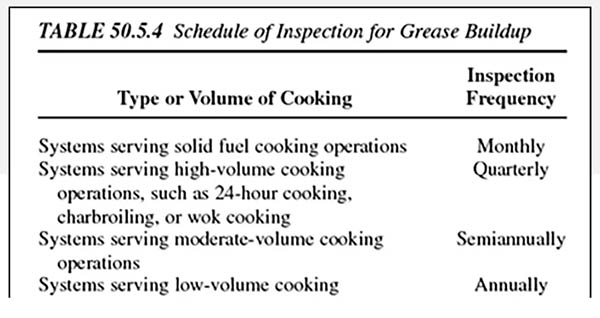
Willard: There are countless factors that go into determining the most suitable kitchen exhaust cleaning and maintenance schedule based on your facility’s needs. For instance, your facility may require more frequent cleanings during the busy holiday season. While recommended cleaning frequencies typically vary depending on cooking type and volume, the NFPA requires that your entire exhaust system be inspected for grease buildup in accordance with the table shown here.
R&R: What preventive maintenance steps can kitchen managers take to reduce fire risk before and during the holidays?
Willard: There are several preventative maintenance steps that kitchen managers can take to help reduce fire risk before and during the holidays. This includes, but is not limited to, scheduling kitchen exhaust cleaning and maintenance services and making a habit of monitoring common problem areas where grease tends to accumulate. In addition to working with kitchen exhaust cleaning professionals, kitchen managers should also establish an in-house cleaning and maintenance checklist. By making this list and assigning tasks to staff members on a rotating basis, kitchen managers can help prevent these simple yet paramount housekeeping items from falling off your and your staff’s radar.
R&R: What is one simple thing every restaurant should check before the holiday rush begins?
Willard: Ideally, before the holiday rush begins, restaurant managers should make sure that their kitchen exhaust system is clean and operating properly. As previously mentioned, if grease has accumulated near kitchen equipment, it has also accumulated in your kitchen exhaust system and the connecting ductwork. This is not only a serious fire hazard but can also have an impact on the unit’s energy efficiency and overall lifespan. Neglected exhaust systems are also more difficult and time-consuming to clean, costing you more money in the long run. That being said, you can help ensure your entire system is receiving proper maintenance by scheduling routine kitchen exhaust cleaning services.
— Nathan Willard is the brand president of HOODZ International, a leading authority in commercial kitchen exhaust cleaning and maintenance. Visit www.hoodzinternational.com.