

— By Shannon Sked, Ph.D., BCE —
How retail and restaurant facilities can help prevent and control flies this summer.
Fly control is one of the most persistent challenges for retail and restaurant facilities. These environments unintentionally offer flies everything they need to survive and reproduce: moisture from drains and sinks, food sources from waste, residues or biofilm, and easy access through busy doors and loading areas.
For restaurants and retailers, fly activity can quickly affect customer confidence, health inspection readiness, employee morale and brand reputation. A proactive Integrated Pest Management (IPM) program helps find the source, correct the conditions and document the response before a few flies become an issue that impacts the bottom line.
Why Fly Control Matters in Customer-Facing Facilities
Flies carry an outsized reputational risk because they are not only a nuisance to guests, but they can also serve as vectors of foodborne pathogens and disease. Flies move freely between waste and other areas, potentially spreading pathogens into food prep or customer spaces. One fly sighting can make a guest question an entire facility’s cleanliness.
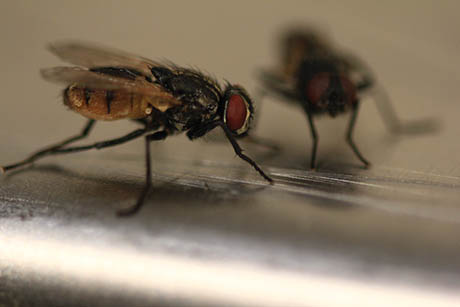
Flies need three primary conditions to survive and reproduce in a facility: moisture, a food source for breeding and access. Retail and restaurant facilities offer plenty of opportunities for all three, especially during warmer months when fly breeding cycles speed up. This means that rather than trying to chase flies, it’s more effective to develop a proactive fly control program and help keep them out of facilities in the first place.
Integrated Pest Management (IPM) programs are built to address fly activity at the source. Identifying the breeding source is the key to eliminating fly problems. Fly IPM interacts critically with other restaurant functions, such as sanitation to eliminate breeding food sources and building maintenance for exclusion. Orkin Commercial’s IPM approach uses inspection, identification, sanitation, exclusion, monitoring and documentation to help retail and restaurant facilities manage the conditions that attract and sustain flies.
Where Fly Problems Usually Begin
Fly activity usually starts where access points are located. Moisture, residue and odors give flies what they need once inside and therefore need to be managed and eliminated wherever possible. In retail and restaurant facilities, the most common hot spots include:
• Doors, Loading Zones and Patios: Start with exclusion. Flies can enter facilities through small open entrances, including receiving doors, patio doors, drive-thru windows, loading docks and trash-run exits. Even small gaps around doors, windows or damaged screens can allow flies to get indoors.
• Beverage Stations and Self-Service Areas: Sticky residue and moisture make soda fountains, coffee bars, condiment counters and self-service stations attractive to small flies and allow them all that they need to breed. These areas are also customer-facing, potentially leading to increased complaints.
• Drains: Floor drains, bar drains, soda stations, prep sinks, restrooms and spaces under equipment can collect organic buildup that supports small fly reproduction. Retail teams should also monitor café areas, floral departments, produce prep zones and employee breakrooms for sitting water and organic buildup.
• Dumpsters and Trash Areas: Waste areas send strong odor signals that attract flies. Restaurants often see pressure around food scraps, trash bins and sugary beverage waste. Retail facilities should monitor compactors, trash rooms, floral trimmings, produce waste and employee break areas. While placing dumpsters as close to the back doors as possible makes it easier to take out the trash, it also makes it easier for flies to enter the building. Therefore, dumpster placement is also a critical aspect of fly IPM.
Why Identifying Fly Species is Important
Different types of flies are attracted to different issues, so identifying the type of fly a facility is addressing is an important first step. Partnering with a knowledgeable pest control professional can help your facility pinpoint the species and develop a suitable strategy.
• House flies are the easiest for customers to see and often will bring about complaints quickly.
• Fruit flies often point toward fermenting organic material such as sugary residue or produce handling areas. These are the same areas where biofilm builds up, which can carry foodborne pathogens that affect food safety.
• Drain flies can indicate buildup in drains in the same filth that is conducive for foodborne pathogens.
• Phorid flies may signal broken plumbing and sewage pipes, creating moist organic material in harder-to-reach locations under building slabs or within walls.
How to Help Prevent Fly Issues in Retail & Restaurant Facilities
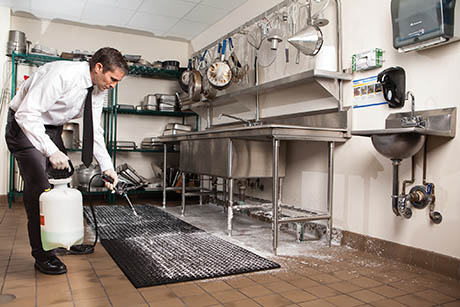
Managing flies effectively calls for an IPM approach that focuses on long term prevention. An effective IPM program for fly control centers on four key areas: inspection, exclusion, sanitation and controls.
Start with Inspection
A thorough fly inspection in a retail or restaurant facility should cover these high-risk zones:
• Drains or other areas where moisture and debris collect, like prep or mop sinks
• Dumpsters, waste or other debris near entrances
• Cracks or other openings where flies could be sneaking in, such as broken floor tiles
Focus on Exclusion Measures
Exclusion measures help physically keep flies outside of your facility:
• Install and maintain door sweeps. If you can slide a dollar bill between the door sweep and the floor, the sweep should be replaced.
• Use air curtains at entrances and exits to create a wall of air that’s difficult for flies to penetrate. This is especially important where employees may try to leave doors open to bring in cooler air on hot days in the kitchen.
• Seal structural gaps and replace damaged screens. To keep out smaller flies, ensure your screens are at least 16 mesh per 1 inch.
Sanitation Addresses the Source
Flies rely on food sources, water and suitable places to reproduce and grow, laying eggs in the filth that the maggots will feed on until they pupate to become adults. Help protect your facility from fly pressure by removing these conditions. If sanitation is in place and these breeding sources are removed, flies will rarely be a significant problem.
• Clean drains with an enzyme-based cleaner to cut through organic buildup.
• Repair conditions that may lead to biofilm accumulation, such as broken floor tiles, gaps around floor drains and in kitchen equipment that is not frequently cleaned.
• Keep dumpsters as far away from your building as possible and power-wash them regularly, including the concrete pad beneath them.
Controls
Despite the most comprehensive sanitation and exclusion measures, a few flies still might sneak into your facility. Mechanical controls, such as insect light traps (ILTs), can help catch these intruders.
For maximum catch rates, ILTs should be installed no more than 3 to 5 feet off the ground. Place ILTs away from entrances and food prep areas to avoid luring flies into the facility and toward food-handling spaces.
For fly issues that have gotten out of hand, a pest management professional can help recommend options that are both compliant and effective for your specific problem.
Fly Control Takes the Whole Team
Daily employee habits help determine whether fly pressure drops or returns.
Managers should train teams to report fly sightings with exact locations and times, keep doors closed when not in active use, clean spills quickly, empty trash before containers overflow and flag drains that smell, clog or attract repeated activity. Employees should be trained on what flies breed in so they understand the detail needed for effective sanitation programs.
By teaming up to address flies inside a facility, retail and restaurant teams can help limit fly pressure and protect the customer experience and brand reputation.
SIDEBAR:
FREQUENTLY ASKED QUESTIONS
1. What causes fly problems in restaurants and retail stores?
Flies need three things to survive and reproduce: food, moisture and a place to breed. With frequently opened doors, food prep areas and waste accumulation, retail and restaurant facilities often provide ideal conditions for fly activity. Flies may be found in different areas than they breed, so identifying and removing breeding sites is key to fly management.
2. Why are flies a concern for restaurants?
Flies can affect sanitation and health inspection readiness because they carry a high contamination risk of foodborne disease. Flies can also be a nuisance for customers and employees alike, affecting their experience and your brand reputation.
3. Why are flies a concern for retail facilities?
Fly activity can affect shopper confidence, employee comfort, merchandise areas and brand reputation. Flies can also spread harmful pathogens.
4. Are insect light traps enough to manage flies?
No. Insect light traps support monitoring and capture, but they work best as part of an IPM program. Effective fly management also requires inspection, exclusion and especially sanitation.
5. How can employees help reduce fly activity?
Employees can help by reporting sightings quickly, keeping doors closed, cleaning spills, removing trash promptly, keeping waste lids closed, storing mops correctly, ensuring facilities are repaired as needed and alerting managers when drains smell or flies appear repeatedly in the same area.
6. What should a fly sighting log include?
A useful log should include the date, time, exact location, type of pest (if known), employee reporting the sighting, action taken and whether activity continued after corrective steps. Even simple descriptions like “small dark fly” or “large house fly size” is helpful to find the source of fly issues.
— Dr. Shannon Sked is Orkin’s national technical director and an entomologist specializing in modern pest management methods. Orkin Commercial builds practical IPM programs grounded in inspection, sanitation, exclusion, monitoring and documentation. With 125 years of pest management experience, Orkin Commercial brings industry-leading expertise to fly control programs for retail and restaurant facilities. Visit www.orkin.com/commercial.