
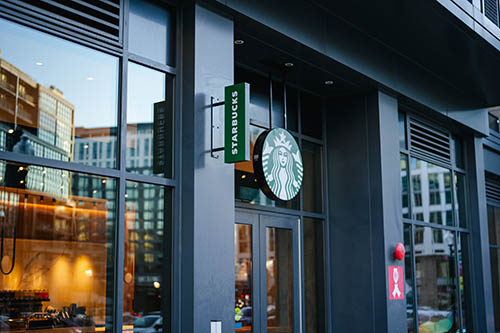
Seattle — At its recent 2026 Investor Day, Starbucks Coffee Company highlighted progress in its “Back to Starbucks” transformation plan, showcasing new coffeehouse and menu innovation, and detailing a financial framework for delivering long term, sustainable growth. By fiscal 2028, the company expects to open 2,000 net new stores across its portfolio, including approximately 400 net new U.S. company-operated stores.
“Starbucks is back,” says Brian Niccol, chairman and chief executive officer. “We’re putting the customer at the center of everything we do and setting our partners up for success. We know there’s more work ahead, but we’re confident in our plan and see significant opportunity in the U.S. and around the world.”
During the event, Mike Grams, Starbucks chief operating officer, showcased how the brand’s Green Apron Service operating model is delivering progress in throughput, elevating the customer experience, enhancing coffeehouses and growing the portfolio. Additionally, Brady Brewer, chief executive officer for Starbucks International, shared the company’s plan to accelerate global growth. In a project referred to as ‘coffeehouse uplifts,’ Starbucks plans to add more than 25,000 café seats across the U.S. by the end of fiscal 2026.
“Starbucks has enduring strengths and we are building on them,” says Cathy Smith, chief financial officer. “Our financial framework shows how we will translate our ‘Back to Starbucks’ strategy into sustainable, profitable growth and compelling shareholder returns.”
Starbucks also announced a reimagined Starbucks Rewards program launching March 10, introducing three levels: Green, Gold and Reserve. Key features include: faster star earning as spending increases; new benefits at every level, including free monthly customizations; stars that never expire for Gold and Reserve members; and exclusive experiences and merchandise for the most loyal members.
“Our Rewards program is strong — and we’re building from a position of leadership,” says Tressie Lieberman, global chief brand officer. “Through the filter of member feedback, revenue and efficiency, we identified clear actions to unlock the next generation of loyalty.”
With Starbucks Rewards driving nearly 60% of U.S. company-operated revenue in fiscal 2025, the company emphasized that small increases in member engagement could unlock significant incremental revenue.
Grams detailed how Starbucks is becoming a more consistent, customer centric, coffeehouse-first operating company through Green Apron Service, which includes targeted investments in partners, equipment and technology. Key initiatives include: Smart Queue to intelligently sequence café, mobile, drive-thru and delivery orders; leveraging artificial intelligence to support partners, including supply chain and scheduling tools; and next-generation espresso equipment like the proprietary Mastrena 3.
These initiatives continue to drive faster service while enabling partners to focus on coffee craft and customer connection. Peak throughput increased in the first quarter of fiscal 2026 to less than 4 minutes on average across café and drive-thru coffeehouses.
The company outlined long term opportunities for growth beyond fiscal 2028 around the world. Highlights include: up to 5,000 new coffeehouse opportunities across the U.S. alone, and, as average unit volumes grow, that number could double over time; double its international coffeehouse footprint over time, approaching 40,000 locations outside the U.S., driven by achieving between 15,000 to 20,000 new coffeehouses in China; and accelerate international licensed store growth, with international coffeehouses expected to grow at double the rate of North America.
“Even with our scale, the U.S. coffeehouse growth opportunity for Starbucks is big and broad,” says Grams. “In fiscal 2028, we expect to ramp to build about 400 net-new coffeehouses across our U.S. company-operated business — with discipline and purpose.”
Starbucks also highlighted its China joint venture with Boyu Capital, shifting the market to a licensed model while retaining a 40% stake.
For more information, visit www.investor.starbucks.com.

Since 1971, Starbucks Coffee Company has been committed to responsibly sourcing and roasting high-quality arabica coffee. Today it has a global footprint of more than 41,000 company-operated and licensed coffeehouses and a growing presence in consumer-packaged goods. For more information, visit www.about.starbucks.com or www.starbucks.com.
SOURCE: Starbucks